

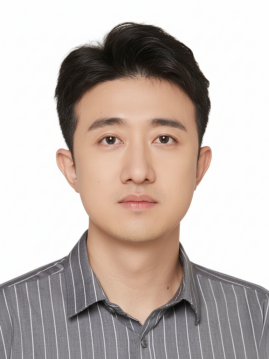
程实:男,中共党员。
email: chengshi1013@gzhmu.edu.cn
生物技术系讲师,系副主任。广东省青年珠江学者。
教育经历
2008.09-2012.06 东北林业大学 学士
2012.09-2015.06 华南师范大学 硕士
2015.10-2019.07 哥廷根大学(德国) 博士
工作经历
2019.08-2022.09 剑桥大学(英国) 博士后
2022.10-至今 广州医科大学 讲师
教学经历及成果
教授本科生课程《免疫治疗》、《疫苗学基础》、《抗体工程》、《生物制品学》等及研究生课程;发表教改论文1篇
教学成果
1.全国高校教师教学创新大赛广东分赛,省级,二等奖,2026,主讲教师
2.广州医科大学教学创新大赛,校级,二等奖,2025,主讲教师
研究方向:蛋白质降解与基因治疗
主持项目
1.全国高校生物医药区域技术转化项目,2026-2027,100万元,在研,主持
2.广东省基础与应用基础研究基金面上项目,2026-2028,10万元,在研,主持
3.呼吸疾病全国重点实验室自主课题,2025-2028,20万元,在研,主持
4.广东省普通高校特色创新项目,2025-2027,5万元,在研,主持
发表文章(部分)
1.Benn, J., Cheng, S.(共同第一/共同通讯作者), Keeling, S., Vaysburd, M., Boken D., Katsinelos T., Smith A., Dupre E., Danis C., Landrieu I., Buee L., Klenerman D., James L.+, McEwan W.+ (2024). Aggregate-selective removal of pathological tau via clustering-activated degraders. Science. 385, 1009-1016.
2.Cheng, S. (第一作者/共同通讯作者), Qi Y., Ya J., Xia L., Zhang W., Xiong Q., Liu Q., Zhang J., & Song Y. (2026). Short-read RNA-seq yields lower estimates of A-to-I RNA editing levels than long-read cDNA sequencing. Advanced Biotechnology. 4, 27-44.
3.Cheng, S.(第一作者), van Gaalen, M. M., Bähr, M., Garea-Rodriguez, E., & Kügler, S. (2021). Optimized pharmacological control over the AAV-Gene-Switch vector for regulable gene therapy. Molecular Therapy-Methods & Clinical Development,23, 1-10.
4.Cheng, S.(第一作者), Tereshchenko, J., Zimmer, V., Vachey, G., ... & Bähr, M. (2018). Therapeutic efficacy of regulable GDNF expression for Huntington's and Parkinson's disease by a high-induction, background-free “GeneSwitch” vector. Experimental Neurology, 309, 79-90.
5.Cheng, S.(第一作者), Zhang, Y. F., Zeng, Z. Q., Lin, J., Zhang, Y. W., Ni, H., & Li, H. H. (2015). Screening, separating, and completely recovering polyphenol oxidases and other biochemicals from sweet potato wastewater in starch production. Applied Microbiology and Biotechnology, 99(4), 1745-1753.
6.Miller, L., Papa, G., Vaysburd, M., Cheng, S., Sweeney, P., ... & James, L. (2024). Co-opting templated aggregation to degrade pathogenic tau assemblies and improve motor function. Cell. 187, 1-14.